





Offshore / Onsite
Hire Dedicated Team
Access a dedicated team of engineers and QA, on-site or remote, focused on your product and your roadmap.
Get StartedWeb application development in React and TypeScript, with an architecture decided per surface and written down, performance budgets enforced in CI, and tests on the paths that lose money when they break. The framework is a choice we justify, not a habit.
Our Clients

















A greenfield app is quick for six weeks and then slows down, usually for the same four reasons. None of them are framework problems, which is why changing framework rarely helps.
Everything client-rendered because the starter template was, so the first paint is slow on the pages that matter for search and conversion.
Rendering chosen per surface with a written reason — static, server, streamed or client — based on what that page has to do.
The client believes a shape the server no longer returns, and the failure surfaces as an undefined in production.
One schema generating both sides, so a backend change breaks the build rather than the user.
A good Lighthouse score at launch, then a steady decline nobody notices until a customer complains.
Budgets in CI. A pull request that regresses bundle size or interaction latency fails, the same as a failing test.
Either no tests, or a suite so slow and brittle that people rerun it hoping for green.
Tests concentrated on the money paths, fast enough that nobody is tempted to skip them.
The application is the visible part. These are what make the second year of it cheaper than the first.
Rendering strategy, state management, data fetching and boundaries — written down with the options rejected, so nobody relitigates them in six months.
One schema source generating client types, server validation and database access, so drift becomes a compile error instead of an incident.
A skeleton in production in week one, behind a flag. The pipeline is proven when it is cheap to fix rather than the week before launch.
Bundle size, Core Web Vitals and interaction latency measured on every pull request, with the build failing on regression.
Semantic structure, focus management and keyboard paths handled as the components are written, verified to WCAG 2.2 AA rather than audited later.
Error tracking, tracing and the dashboards your on-call rotation will actually use, wired up before the first real user arrives.
The common thread: real users, real data volumes, and a genuine cost when the interface is slow or wrong.
Portals and self-service applications where speed, accessibility and reliability are all commercially visible.
The screens a team lives in all day, where density and keyboard speed matter more than visual novelty.
Where two or three user types share surfaces and the permission model is most of the complexity.
Data-heavy interfaces that have to stay responsive as accounts grow past the demo dataset.
Replacing an ageing interface incrementally, without a flag-day rewrite and without retraining every user.
Streaming output, editable results and cost controls, built as product rather than as a prompt box.
Somewhere between a quarter and a third of a web build is mechanical: component skeletons, type definitions, test fixtures, repetitive refactors, API client code. Our engineers generate that layer and spend the recovered time on architecture, edge cases and performance work — the parts that actually decide whether the product holds up. You pay for fewer hours, and the hours you do pay for go on judgement.
Components, types, fixtures and API clients generated from the schema rather than typed by hand. The saving compounds across every feature, and it is the least interesting code in the build.
Edge cases enumerated from type signatures and component states, so the null, the empty array and the four-thousand-row list get tested. Previously this was the coverage teams skipped when the sprint got tight.
Framework upgrades and codemods applied uniformly across hundreds of files. Work that used to be deferred for quarters because nobody could justify the hours becomes routine maintenance.
The efficiency is real because the review is not skipped. Every line goes through the same pipeline, the same tests and the same named owner, which is what stops speed turning into a maintenance bill later.
See our AI practiceAn engineer owns the change, explains it in review and is accountable in production. Provenance never changes the standard applied.
Generated code passes the same types, tests, accessibility checks and performance budgets. Nothing merges on a lighter path.
We price the build with this assumed rather than billing the old way and keeping the difference. It is visible in the number you approve.
Where your organisation restricts AI assistance or code cannot leave your estate, we work within that and price accordingly. We ask at kickoff.
The riskiest part of a build is the pipeline, not the features. So an empty application goes to production first, and everything after that is additive rather than a leap of faith at the end.
Rendering strategy, boundaries and data approach agreed and written down, then an empty application deployed through the real pipeline behind a flag.
One schema source generating client types, server validation and database access. Get this right and a whole category of production bug simply cannot happen.
Each slice ends with something on staging you can open and use. Not a percentage or a status update — a build, with tests on the paths that matter.
Bundle size, Core Web Vitals, accessibility checks and test coverage on the critical paths, all blocking. Quality maintained by the pipeline rather than by remembering.
Load testing, error paths, monitoring and dashboards, then a walkthrough for whoever will be on call. This is the phase most projects delete when late.
Your stack where you have one, ours where you do not. Everything runs in your accounts and repositories, so nothing here is a dependency on us.







Your stack where you have one, ours where you do not. Everything runs in your accounts and repositories, so nothing here is a dependency on us.


Your stack where you have one, ours where you do not. Everything runs in your accounts and repositories, so nothing here is a dependency on us.





Your stack where you have one, ours where you do not. Everything runs in your accounts and repositories, so nothing here is a dependency on us.



Your stack where you have one, ours where you do not. Everything runs in your accounts and repositories, so nothing here is a dependency on us.




Case Studies
Selected work for retail, banking, telecom and defence teams, from brand identity and mobile apps to data platforms and AI assistants.
Panda
Reworked search, categories and checkout in Panda’s live app and website, in Arabic and English.
EDGE Group
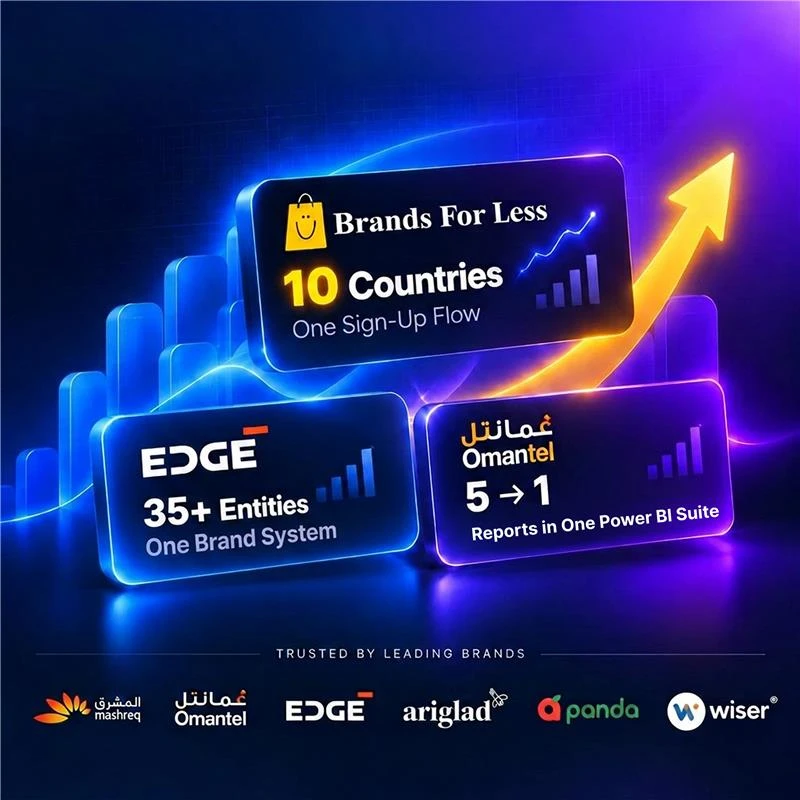
Brand identity, website and print for a group of 12,000 staff, carried onto the IDEX show floor.
Mashreq NEO
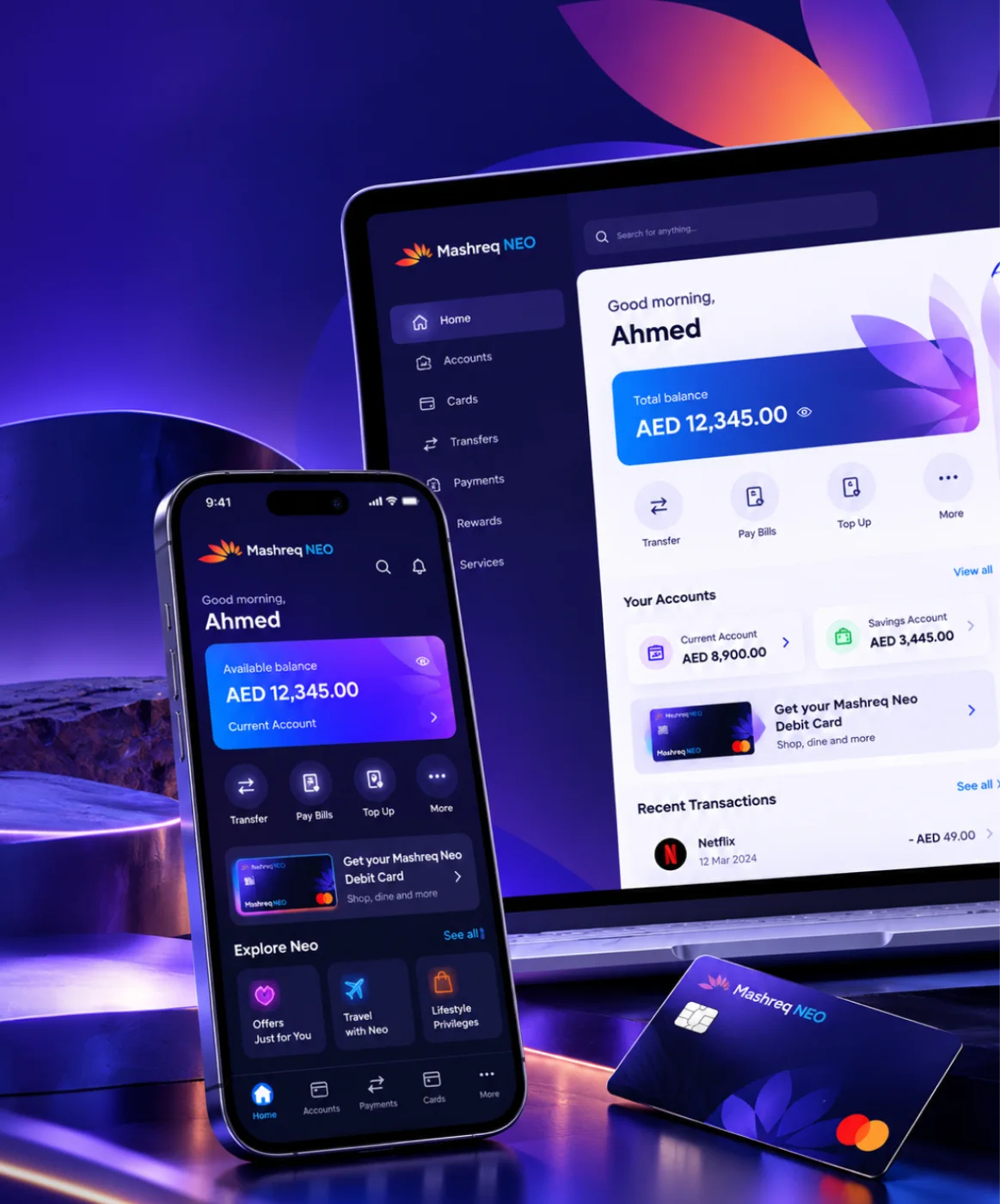
Six performance areas in one index for leadership, plus NEO GPT, a private assistant for bank documents.
Brands For Less
Found where shoppers dropped off, then redesigned sign-up, banners and cart for a retailer with 120+ stores.
Omantel
Incident, SLA and workload reporting in one Power BI suite for Oman’s first telecom operator.




Client Testimonials
Client Success: Panda
We reworked Panda's live app and website, from search to checkout, for shoppers across Saudi Arabia.
"Thanks to UIUX Studio’s work, the client successfully launched their websites. The team maintained a professional approach and scheduled frequent in-person meetings to provide suggestions for improving the project and ensuring its timely delivery."
 Shreya LadCEO, Nutroponics
"The team is well-versed in the UI/UX domain and has designed a fantastic journey to support the site’s growth projection. Communication, timeliness, and quality of work have been very professional."
 Mohammed AbdullahZeaara.com
"The Studio has been an absolute game changer for us. After working on a few independent projects, they are now also helping our marketing team, proving their value to our business and earning praise from executives."
 BrandonProject Manager
"The UIUX Studio team consistently delivers exceptional work with dedication. We’ve completed an amazing app design together, and I’m excited to collaborate with them again in the future."
 Hani Farajvancouverhousefinders.com
"We are really pleased with the work that UIUX Studio team has completed for us in designing a website for a new brand. They completed the designs quickly, took on board changes, and the finished product is very professional."
 AnayaHead of Marketing, Freshminds
"I’ve worked with UIUX Studio team on two projects. They capture the vision and run with it! They create exceptional design! Couldn’t be happier with the quality work and files for my developers."
 Brandon PugmirePresident, Imprint City
 Client Results
Reviewed on Upwork, Trustpilot, Clutch, G2 and GoodFirms





Work With Us
UIUX Studio offers flexible software development services with dedicated teams to meet your business needs. Whether you need an end-to-end build or specialised engineering expertise, our engagement models give you the support to launch and scale.
Access a dedicated team of engineers and QA, on-site or remote, focused on your product and your roadmap.
Get StartedGet clear, upfront pricing for a defined build, such as an MVP, an integration or a platform migration.
Get StartedGet expert engineers by the hour, perfect for code reviews, bug fixes, small features or architecture advice without a long-term commitment.
Get StartedStory points measure activity. These measure whether the software is getting better or quietly getting worse.
Real-user LCP, INP and CLS on the pages that matter commercially, tracked per release rather than sampled once.
How often you can ship and how long a change takes to reach production. Both are proxies for how safe the pipeline feels.
Share of deploys needing a fix or rollback. Rising numbers mean the tests are not covering what they should.
Not overall coverage, which is easy to game, but coverage of the flows that cost money when they break.
Tracked per pull request. Performance decays gradually, so it has to be measured continuously to be held.
Automated checks in CI plus a manual pass per release, reported rather than accumulated silently.
From retail apps and banking dashboards to a defence group rebrand, we bring proven domain knowledge to every product we design and build.
Talk to Our Team
Streaming, OTT & content platforms

Fan engagement & live data

EdTech & learning platforms

AdTech & campaign tooling

PropTech & marketplaces

Payments, banking & wealth

Digital health & patient apps

Retail & D2C platforms

Supply chain & fleet ops
B2B products & dashboards
A web application rarely arrives alone. These are the services most often scoped alongside one.
The contracts and integrations underneath, agreed before either side writes code.
View service ↗The pipeline, environments and observability the application deploys through.
View service ↗Test strategy, penetration testing and accessibility audited to WCAG 2.2 AA.
View service ↗Flows, states and interface design settled before engineering estimates against them.
View service ↗Forty-five minutes with a senior engineer. We will tell you which decisions will be expensive to reverse, what we would deploy in week one, and where the estimate is most likely to be wrong. No deck, no discovery fee.
Scope a web buildBook a free consultation with our design, engineering and AI experts. Share your idea and we’ll come back within one business day with clear next steps.
Recognised By


Our Offices

UAE · Headquarters
Office OFF2-127, SMARK 2 Building, Plot No. 33-0, Ras Al Khor Industrial Second, Dubai, UAE

India
B-409, Bestech Business Tower, Sector 66, SAS Nagar, Punjab 160062

Australia
Tapleys Hill Road, Fulham Gardens, SA 5024