





Offshore / Onsite
Hire Dedicated Team
Access a dedicated team of engineers and QA, on-site or remote, focused on your product and your roadmap.
Get StartedSaaS product development with tenancy and data isolation settled before build, billing that reconciles with finance, admin tooling your support team can actually use, and onboarding that does not need a sales call. The decisions that are cheap now and close to impossible later.
Our Clients

















SaaS products fail slowly. Each of these is a fortnight of thought at the start and a multi-quarter migration once you have customers, and all four get deferred because none of them are visible in a demo.
Shared tables with a tenant column and no enforcement, so one missing filter becomes a cross-account data leak.
Isolation strategy chosen against your compliance and scale needs, enforced at the data layer rather than trusted to every query.
Plans hard-coded, usage counted in two places, and revenue in the product that never matches the ledger.
Metering as a first-class concern, reconciled with finance monthly, with plan changes as configuration rather than deploys.
Support asks engineering to run SQL for routine requests, which is slow, unauditable and eventually causes an incident.
Admin surfaces built with the product: impersonation with audit, plan changes, refunds and data export, all self-serve for support.
Roles added per feature until nobody can answer what a given user can actually see.
A role and scope model defined once and applied consistently, so a new feature inherits permissions rather than inventing them.
Half of a SaaS product is never seen by a customer. That half is what decides whether you can scale support, pricing and compliance.
Row, schema or database-level isolation chosen deliberately, enforced in the data layer, and verified with tests that attempt cross-tenant access.
Subscription lifecycle, usage metering, proration, dunning and tax, integrated so finance can reconcile it rather than estimate it.
A scope model covering organisations, teams, delegated access and service accounts, applied consistently across every surface.
Impersonation with audit trails, plan and entitlement changes, refunds, exports and account merges — without engineering involvement.
Signup, workspace creation, invitations and first-value flow that works without a human, because sales-assisted onboarding does not scale.
Release control and plan gating on the same system, so a feature can ship dark, roll out by cohort, and be sold by tier.
Rarely a blank page. Usually a product that worked at ten customers and is straining at two hundred.
Taking a prototype or internal tool to something you can sell, bill and support without a founder in the loop.
A product deployed per customer that has become unmaintainable. The migration is delicate and worth doing once, properly.
SSO, SCIM, audit logs, data residency and role granularity — the list that arrives with your first large prospect.
Moving from seats to usage, or adding tiers, when the current billing code cannot express the new model.
When engineering spends a day a week on support requests that admin tooling should handle.
Preparing for a SOC 2 or ISO 27001 audit without discovering that the architecture makes half the controls impossible.
A SaaS platform carries an enormous volume of necessary but repetitive work: isolation tests across every table, migration and backfill scripts, admin CRUD surfaces, webhook handlers, seed data. It is the work that gets cut when a deadline tightens, and cutting it is exactly how platforms end up with data leaks and a support queue. Generating that layer means it stops being the thing that gets sacrificed.
Cross-tenant access tests generated across every table and endpoint. Hand-written, this is a fortnight nobody budgets for, so it gets partially done — which is the same as not done.
The CRUD screens, filters and audit views your support team needs, scaffolded fast. This is the work most commonly deferred, and deferring it turns engineering into a support queue.
Repetitive data migrations drafted consistently, then dry-run against a production copy and reviewed line by line. Consistency here is worth more than speed.
Tenancy strategy, permission boundaries and billing reconciliation are decided and written by senior engineers. Efficiency on the surrounding volume is what makes room for that thinking inside a realistic budget.
See our AI practiceDrafted scripts run against a production copy and are read line by line before touching real data. No exceptions under time pressure.
Anything near an authorisation boundary is deliberate, hand-written and reviewed twice. Isolation is proven by tests, never assumed.
Exhaustive coverage is a floor. An engineer adds the cases specific to your access patterns and confirms the failures actually fail.
The build estimate assumes this way of working. You are not billed for hand-written boilerplate we did not hand-write.
Tenancy, permissions and billing are the three things that cost a quarter to change once you have customers. All three are decided in the first fortnight, before any feature work starts.
Isolation strategy, role and scope model, and how enterprise requirements will be added later. Written down with the rejected options and the migration cost of changing our mind.
Plans, metering, proration and tax designed with whoever owns revenue recognition. Billing built without finance in the room is billing that will not reconcile.
Every customer-facing feature ships with the admin tooling to support it. Deferring admin work is how engineering becomes a support queue.
Feature flags and entitlements on one system, so a release can ship dark, roll out by cohort, be sold by tier and be reversed without a deploy.
Automated cross-tenant access tests, load testing against realistic tenant distribution, and the noisy-neighbour scenarios that only appear with uneven data.
Running in your cloud accounts under infrastructure code. Billing and identity are the two places we lean on proven vendors rather than building from scratch.







Running in your cloud accounts under infrastructure code. Billing and identity are the two places we lean on proven vendors rather than building from scratch.



Running in your cloud accounts under infrastructure code. Billing and identity are the two places we lean on proven vendors rather than building from scratch.








Running in your cloud accounts under infrastructure code. Billing and identity are the two places we lean on proven vendors rather than building from scratch.




Running in your cloud accounts under infrastructure code. Billing and identity are the two places we lean on proven vendors rather than building from scratch.


Case Studies
Selected work for retail, banking, telecom and defence teams, from brand identity and mobile apps to data platforms and AI assistants.
Panda
Reworked search, categories and checkout in Panda’s live app and website, in Arabic and English.
EDGE Group
Brand identity, website and print for a group of 12,000 staff, carried onto the IDEX show floor.
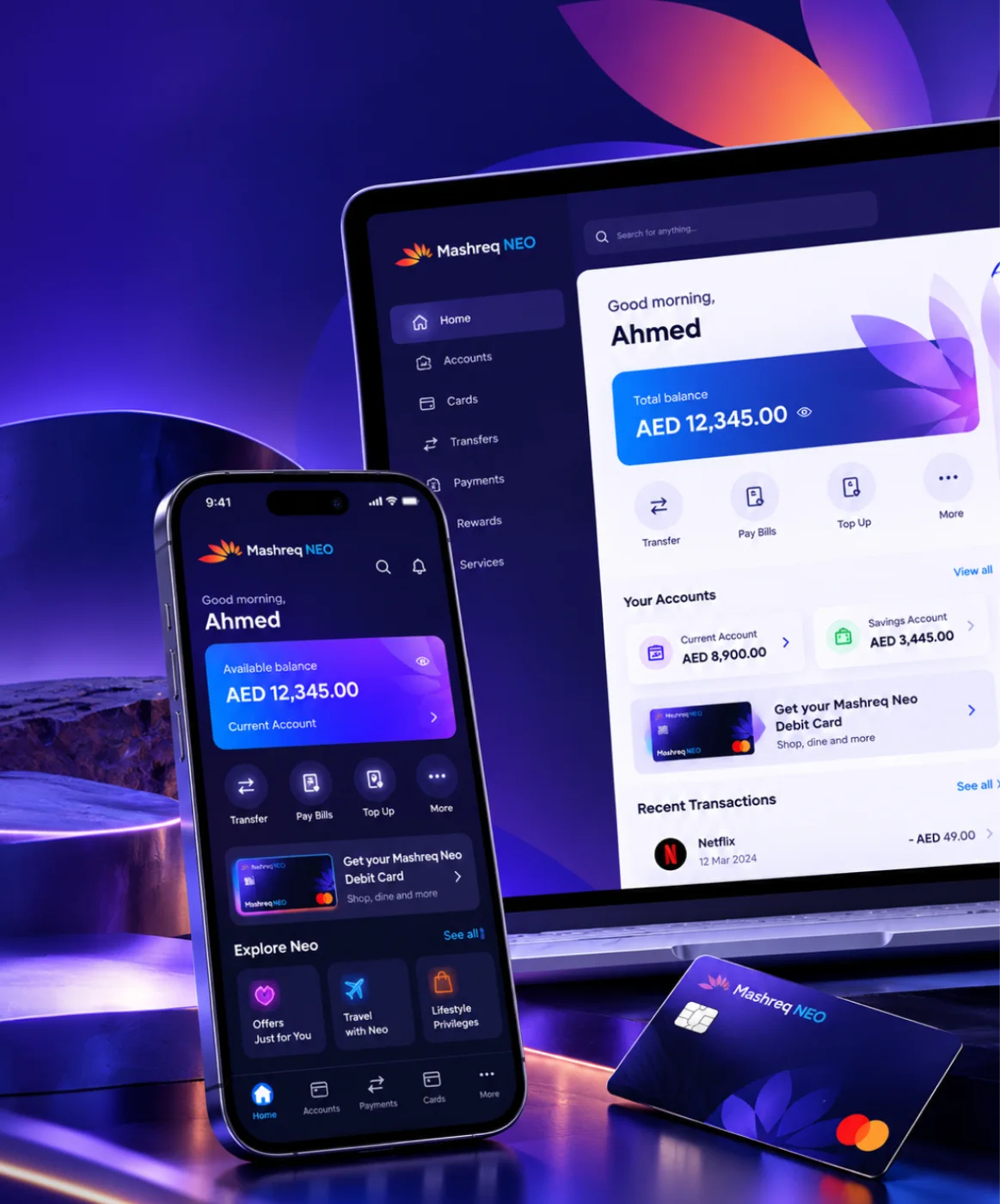
Mashreq NEO
Six performance areas in one index for leadership, plus NEO GPT, a private assistant for bank documents.
Brands For Less
Found where shoppers dropped off, then redesigned sign-up, banners and cart for a retailer with 120+ stores.
Omantel
Incident, SLA and workload reporting in one Power BI suite for Oman’s first telecom operator.




Client Testimonials
Client Success: Panda
We reworked Panda's live app and website, from search to checkout, for shoppers across Saudi Arabia.
"Thanks to UIUX Studio’s work, the client successfully launched their websites. The team maintained a professional approach and scheduled frequent in-person meetings to provide suggestions for improving the project and ensuring its timely delivery."
 Shreya LadCEO, Nutroponics
"The team is well-versed in the UI/UX domain and has designed a fantastic journey to support the site’s growth projection. Communication, timeliness, and quality of work have been very professional."
 Mohammed AbdullahZeaara.com
"The Studio has been an absolute game changer for us. After working on a few independent projects, they are now also helping our marketing team, proving their value to our business and earning praise from executives."
 BrandonProject Manager
"The UIUX Studio team consistently delivers exceptional work with dedication. We’ve completed an amazing app design together, and I’m excited to collaborate with them again in the future."
 Hani Farajvancouverhousefinders.com
"We are really pleased with the work that UIUX Studio team has completed for us in designing a website for a new brand. They completed the designs quickly, took on board changes, and the finished product is very professional."
 AnayaHead of Marketing, Freshminds
"I’ve worked with UIUX Studio team on two projects. They capture the vision and run with it! They create exceptional design! Couldn’t be happier with the quality work and files for my developers."
 Brandon PugmirePresident, Imprint City
 Client Results
Reviewed on Upwork, Trustpilot, Clutch, G2 and GoodFirms





Work With Us
UIUX Studio offers flexible software development services with dedicated teams to meet your business needs. Whether you need an end-to-end build or specialised engineering expertise, our engagement models give you the support to launch and scale.
Access a dedicated team of engineers and QA, on-site or remote, focused on your product and your roadmap.
Get StartedGet clear, upfront pricing for a defined build, such as an MVP, an integration or a platform migration.
Get StartedGet expert engineers by the hour, perfect for code reviews, bug fixes, small features or architecture advice without a long-term commitment.
Get StartedFeature counts say nothing about whether the platform can scale commercially. These do.
Difference between product-reported revenue and the ledger. This should be near zero and it is the first number finance asks for.
Tickets that need a developer. Falling counts mean admin tooling is doing its job.
Share of tables and endpoints with automated isolation tests. Anything uncovered is named rather than assumed safe.
How long from signup to the thing the product is for, without a human involved.
Performance on your largest accounts specifically. Aggregates hide the noisy-neighbour problems that lose enterprise customers.
Deploys needing a fix or rollback. Flags should make this recoverable in minutes rather than hours.
From retail apps and banking dashboards to a defence group rebrand, we bring proven domain knowledge to every product we design and build.
Talk to Our Team
Streaming, OTT & content platforms

Fan engagement & live data

EdTech & learning platforms

AdTech & campaign tooling

PropTech & marketplaces

Payments, banking & wealth

Digital health & patient apps

Retail & D2C platforms

Supply chain & fleet ops
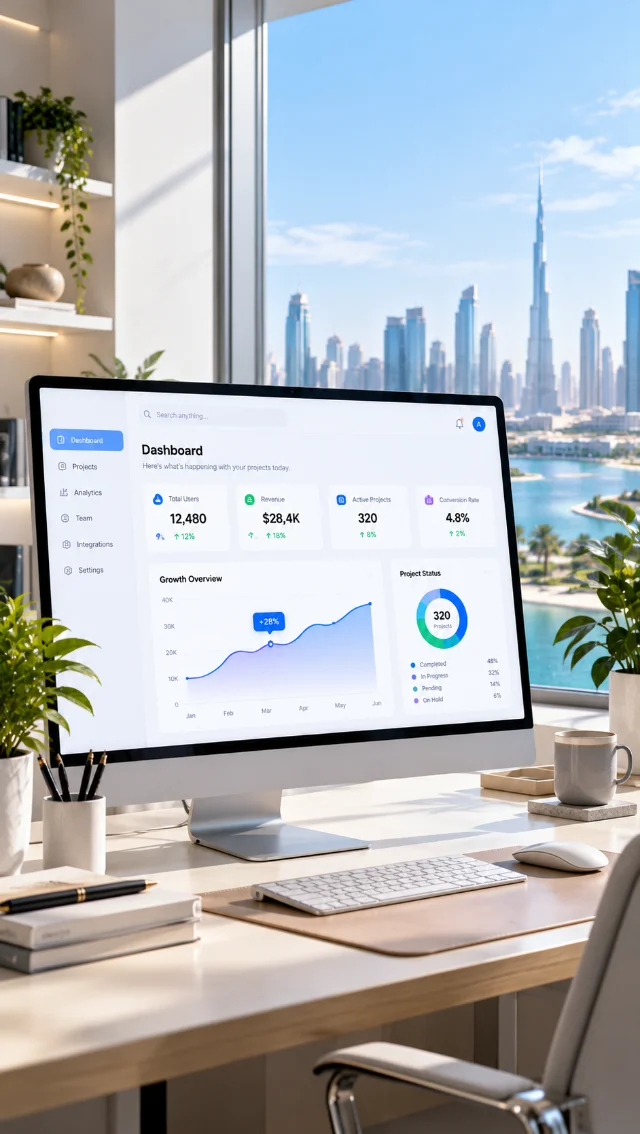
B2B products & dashboards
SaaS work touches nearly every other engineering discipline, because the platform is the product.
The product surfaces themselves, typed end to end with performance budgets enforced.
View service ↗Public APIs, webhooks and integrations — usually an enterprise requirement rather than a nice-to-have.
View service ↗Environments, progressive delivery and the per-tenant cost visibility finance will ask for.
View service ↗Isolation testing, penetration testing and the evidence SOC 2 or ISO 27001 requires.
View service ↗Forty-five minutes with a senior engineer. We will tell you which of your architecture decisions will be expensive to reverse, what your first enterprise customer will demand, and where the billing model breaks. No deck, no discovery fee.
Scope a SaaS buildBook a free consultation with our design, engineering and AI experts. Share your idea and we’ll come back within one business day with clear next steps.
Recognised By


Our Offices

UAE · Headquarters
Office OFF2-127, SMARK 2 Building, Plot No. 33-0, Ras Al Khor Industrial Second, Dubai, UAE

India
B-409, Bestech Business Tower, Sector 66, SAS Nagar, Punjab 160062

Australia
Tapleys Hill Road, Fulham Gardens, SA 5024