





Offshore / Onsite
Hire Dedicated Team
Access a dedicated team of UI/UX designers and researchers, on-site or remote, who work alongside your engineers every week.
Get StartedInformation architecture, task flows and every state a screen can be in — mapped before anything is styled. Permissions, empty states and the awkward third role get found now, while changing them costs a conversation rather than a sprint.
Our Clients

















Every project is estimated against the screen where everything goes right. The overrun comes from the four states nobody drew — and they are entirely predictable, which is what makes skipping them expensive rather than unlucky.
Discovered in QA when a new account signs in and the dashboard is a blank grid with no explanation.
Designed as the first-run experience, which is where activation is won rather than an afterthought.
Mid-build, when someone asks what a read-only user sees on a page full of edit controls.
A role matrix per screen, so the backend contract is right the first time.
In production, as a spinner that never resolves or a form that loses everything a user typed.
Recovery paths designed with the flow, so failure is handled rather than logged.
When a real account arrives with four thousand rows and the design assumed twelve.
Realistic data volumes in the flow from the start, so pagination and filtering are designed, not bolted on.
None of this is pretty. All of it is what determines whether the pretty part gets built correctly.
How the product is organised and named, tested with card sorting rather than agreed in a meeting between people who already know where everything is.
Every path through a job, including the ones that fail, branch or get abandoned halfway and resumed on another device.
Empty, loading, partial, error, permission-denied and over-full, listed explicitly so none of them arrive as a surprise in QA.
Who sees what, who can do what, and what a shared or delegated account changes. This is where backend contracts are really decided.
Structural, deliberately unstyled, so reviews are about whether the flow works rather than whether the blue is right.
The decisions we could not make without you, listed with their consequences, so nothing is silently assumed on your behalf.
All of these share the same trait: the difficulty is in the logic rather than the look, and getting the logic wrong is expensive.
Admin, manager, member and guest all need different things from the same screens. Mapping it beats discovering it in the API.
The flow with the most drop-off and the most edge cases, usually designed last and under time pressure.
Setup wizards, rule builders and permission screens where the branching is the product and a single missing state breaks it.
A product that grew by accretion. Reorganising it needs testing with users, not consensus among people who built it.
Checkout, applications, claims — anything a user can abandon, resume, correct or have rejected partway through.
Where the existing workflow has to keep working for people who know it, while the interface underneath changes completely.
Enumerating every permission combination and failure path is exhaustive, mechanical work, and exhaustion is precisely when a state gets forgotten. We use models to generate the full matrix and read your existing codebase for flows nobody documented. Which states matter, and what the interface does about them, stays a design decision.
Every role crossed with every condition, generated in full and then pruned by a designer. Completeness is the part a person is worst at and a model is good at.
Existing routes, conditions and permission checks read straight from the code, so a modernisation starts from what the system actually does rather than what the documentation claims.
Flows checked against each other for divergent handling of the same situation — the drift that makes a product feel like four products.
A generated list of states is an input to the work, never the output. Every one is kept, merged or dropped deliberately, with a reason.
See our AI practiceEvery entry in the matrix is confirmed or removed by a designer. Nothing reaches a wireframe because a model suggested it.
We use your repository as a source of truth about existing behaviour. Nothing is modified, and access is read-only.
Anything inferred from the codebase is confirmed with the team who maintain it before it becomes a documented flow.
Navigation and hierarchy are tested with users and debated with your team. No model has an opinion worth having about that.
Your engineers sit in these sessions. It is the cheapest hour they will spend on the project, because every question they raise here is one that would otherwise arrive as rework in week nine.
Every screen, route and rule the product already has, including the ones nobody documented. On a modernisation this step alone usually surprises the team who built it.
How the product is organised and named, tested with card sorting and tree testing rather than agreed among people who already know where everything lives.
Every path through each job, including branches, abandonment and resumption. Your engineers are in these sessions, because their questions are the valuable part.
Every screen crossed with every condition and every role. Exhaustive, mechanical and the single highest-value artefact this engagement produces.
Deliberately unstyled wireframes so reviews stay about the flow, plus a written log of the decisions we could not make without you and what each one costs.
Set up in your accounts, in the tools your team already opens. Maps nobody can find are the same as maps nobody made.


Set up in your accounts, in the tools your team already opens. Maps nobody can find are the same as maps nobody made.


Set up in your accounts, in the tools your team already opens. Maps nobody can find are the same as maps nobody made.



Set up in your accounts, in the tools your team already opens. Maps nobody can find are the same as maps nobody made.





Set up in your accounts, in the tools your team already opens. Maps nobody can find are the same as maps nobody made.






Case Studies
Selected work for retail, banking, telecom and defence teams, from brand identity and mobile apps to data platforms and AI assistants.
Panda
Reworked search, categories and checkout in Panda’s live app and website, in Arabic and English.
EDGE Group
Brand identity, website and print for a group of 12,000 staff, carried onto the IDEX show floor.
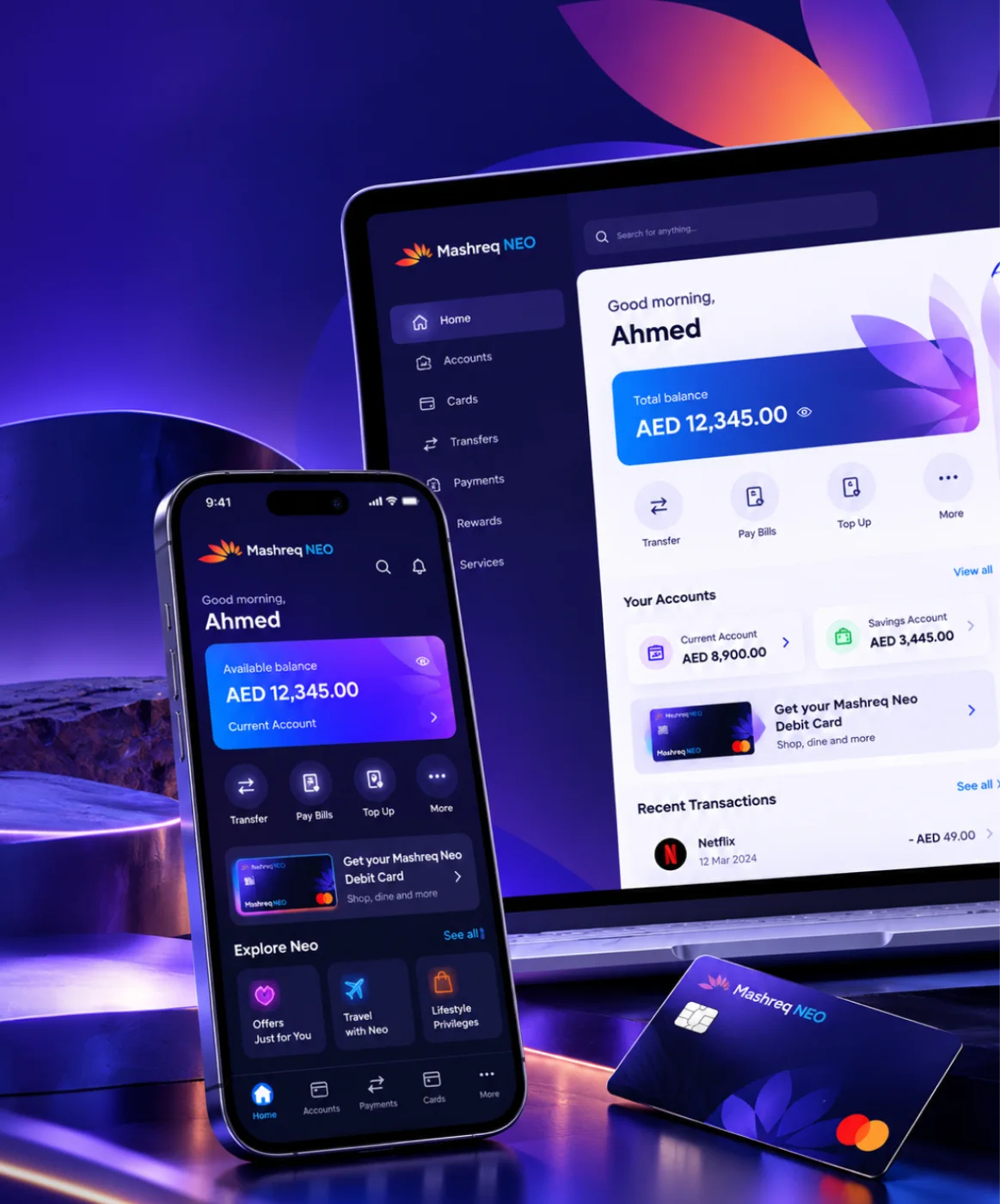
Mashreq NEO
Six performance areas in one index for leadership, plus NEO GPT, a private assistant for bank documents.
Brands For Less
Found where shoppers dropped off, then redesigned sign-up, banners and cart for a retailer with 120+ stores.
Omantel
Incident, SLA and workload reporting in one Power BI suite for Oman’s first telecom operator.




Client Testimonials
Client Success: Panda
We reworked Panda's live app and website, from search to checkout, for shoppers across Saudi Arabia.
"Thanks to UIUX Studio’s work, the client successfully launched their websites. The team maintained a professional approach and scheduled frequent in-person meetings to provide suggestions for improving the project and ensuring its timely delivery."
 Shreya LadCEO, Nutroponics
"The team is well-versed in the UI/UX domain and has designed a fantastic journey to support the site’s growth projection. Communication, timeliness, and quality of work have been very professional."
 Mohammed AbdullahZeaara.com
"The Studio has been an absolute game changer for us. After working on a few independent projects, they are now also helping our marketing team, proving their value to our business and earning praise from executives."
 BrandonProject Manager
"The UIUX Studio team consistently delivers exceptional work with dedication. We’ve completed an amazing app design together, and I’m excited to collaborate with them again in the future."
 Hani Farajvancouverhousefinders.com
"We are really pleased with the work that UIUX Studio team has completed for us in designing a website for a new brand. They completed the designs quickly, took on board changes, and the finished product is very professional."
 AnayaHead of Marketing, Freshminds
"I’ve worked with UIUX Studio team on two projects. They capture the vision and run with it! They create exceptional design! Couldn’t be happier with the quality work and files for my developers."
 Brandon PugmirePresident, Imprint City
 Client Results
Reviewed on Upwork, Trustpilot, Clutch, G2 and GoodFirms





Work With Us
Work with a dedicated design team, a fixed-scope project or hourly support. Every model gives you the same in-house designers and researchers.
Access a dedicated team of UI/UX designers and researchers, on-site or remote, who work alongside your engineers every week.
Get StartedGet clear, upfront pricing for a defined design project, such as product discovery, a mobile app design or a design system.
Get StartedGet design help by the hour, perfect for UX reviews, quick UI fixes, iterative changes or design QA before a release.
Get StartedNone of it is visible in a screenshot. All of it is visible in how the build goes.
How close the build came to the estimate made from these flows. This is the number the work exists to improve.
States and rules found after development started. Never zero, but it should be a handful rather than a weekly occurrence.
Whether users get through the flow unaided, measured on wireframes before any visual design exists.
Tree-test success on the navigation. If people cannot locate a feature, nothing downstream of that matters.
Screens redrawn because the logic changed. Usually traces back to a state nobody mapped.
Post-launch, on the journeys we mapped versus the ones we did not. The clearest evidence the work paid for itself.
From retail apps and banking dashboards to a defence group rebrand, we bring proven domain knowledge to every product we design and build.
Talk to Our Team
Streaming, OTT & content platforms

Fan engagement & live data

EdTech & learning platforms

AdTech & campaign tooling

PropTech & marketplaces

Payments, banking & wealth

Digital health & patient apps

Retail & D2C platforms

Supply chain & fleet ops
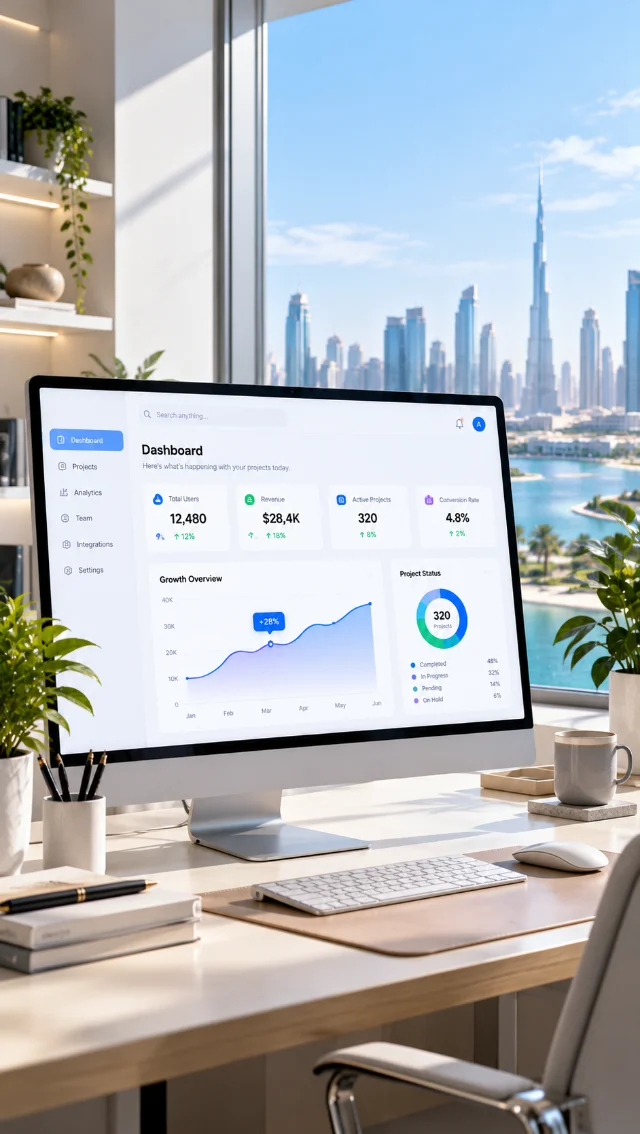
B2B products & dashboards
Architecture sits between knowing what to build and making it look like something. These are the services either side of it.
The problems worth solving, established before anyone maps a flow to solve them.
View service ↗Interface design on top of a structure that already works, built as components from the first screen.
View service ↗Testing the flows on real users while they are still wireframes and changing them is free.
View service ↗Where the architecture problem is tables, filters, bulk actions and queues rather than pages.
View service ↗Forty-five minutes with a designer and an engineer. We will find the states nobody has drawn, tell you which ones will cost you, and what a week of mapping would settle. No deck, no discovery fee.
Map a flow with usBook a free consultation with our design, engineering and AI experts. Share your idea and we’ll come back within one business day with clear next steps.
Recognised By


Our Offices

UAE · Headquarters
Office OFF2-127, SMARK 2 Building, Plot No. 33-0, Ras Al Khor Industrial Second, Dubai, UAE

India
B-409, Bestech Business Tower, Sector 66, SAS Nagar, Punjab 160062

Australia
Tapleys Hill Road, Fulham Gardens, SA 5024