





Offshore / Onsite
Hire Dedicated Team
Access a dedicated team of UI/UX designers and researchers, on-site or remote, who work alongside your engineers every week.
Get StartedPrototyping and usability testing: prototypes real enough to test, put in front of real users, measured on task completion rather than opinion. Every finding comes back as a specific change to a specific screen, with a recommendation on whether it is worth making.
Our Clients

















A walkthrough is a performance with a narrator. A test is a person alone with a goal. The two produce opposite conclusions about the same screen, and only one of them predicts what happens after launch.
A designer clicks, narrating the intended path. Every ambiguity is resolved before anyone notices it exists.
The user drives, unaided. Where they hesitate is the finding, and the silence before a click is the data.
"Does this look right to you?" Which invites taste, seniority and politeness rather than evidence.
"Renew the subscription for the London office." A goal with a right answer, so success is observable.
Nothing. The outcome is a mood in the room, and the mood is usually positive because the deck was good.
Completion rate, time on task, errors and where people gave up. Numbers that survive the meeting.
Feature requests from whoever spoke last, and a general sense that the direction is fine.
A ranked list of specific changes to specific screens, each tied to how many people it affected.
Not a report on how the sessions went. A list of things to change, ordered by how much difference each will make.
Realistic enough that people behave normally: real copy, real data volumes, working states. Users forgive rough visuals and stumble badly on fake content.
Goals written so they do not contain the answer. "Find the export button" tests nothing; "send last quarter to your accountant" tests everything.
Per task, per participant: finished unaided, finished with a nudge, or gave up. Plus how long it took against your baseline.
Every problem with severity, how many participants hit it, and the specific screen it lives on. Sorted so the first three are obvious.
What we would change and what we would leave. Some findings are real and still not worth fixing, and we say which.
Thirty-second cuts of the moments that matter. One clip of a customer failing ends a roadmap argument faster than any amount of analysis.
The common factor: expensive to build, painful to reverse, and currently being argued about on the basis of taste.
The flow with the highest drop-off and the least observation. Five sessions here typically pays for the whole engagement.
Anything with a completion rate attached to revenue, where a percentage point is worth more than the test costs.
Testing the new version against the old on the same tasks, so "it feels better" becomes a number your board accepts.
Rather than debating which concept is stronger, put both in front of eight users and let the completion rates decide.
Rule builders, permission screens and setup wizards, where the designer understands the model and nobody else does.
Where a misunderstanding has consequences beyond conversion and "users should have read it" is not a defence.
There is a growing market in AI panels that will happily tell you your design tests well. We do not use them, and we would advise against buying them. What we do use AI for is the hours around the sessions: building the prototype faster, tagging what happened, and finding the moment worth watching.
Plausible names, volumes and edge-case records instead of Lorem Ipsum. Users behave differently in front of real-looking content, and generating it used to cost a day.
Transcripts aligned to screen recordings and tagged for confusion, backtracking and abandonment, so a researcher reviews moments rather than scrubbing footage.
Cross-session clustering that surfaces the issue three people hit in different words. The judgement about severity stays with the researcher.
It has no goal, no impatience and nothing at stake. Every finding we report came from a person attempting a real task.
See our AI practiceEvery completion rate we report comes from a human session. We will not run an AI panel even if asked, because the number would be fiction.
An automated confusion tag is a pointer to a timestamp. A researcher watches it and decides whether it was a real problem.
Recordings processed under your consent terms, faces and identifiers redacted before anything is shared internally.
How badly a problem matters depends on who hit it and what it cost them. That is judgement, not clustering.
Short rounds beat big studies. Five users find most of what is wrong, and running three small rounds across a quarter catches more than one large one ever does.
The goals we will ask people to achieve, worded so they do not contain the answer, plus who we need in the sessions. Badly written tasks produce confident findings about nothing.
Realistic enough that people behave normally. Real copy, plausible data, working states and the paths a user might wander down instead of the one we hope they take.
Five to eight moderated sessions, users driving unaided. Your team is invited to watch, because a product lead seeing someone fail changes more minds than any report.
Completion, time and errors per task, plus every issue tagged by severity and frequency. The output is ordered so the first three items are the argument-enders.
What to change on which screen, what to leave alone, and what needs another round to answer. Where we designed it, the revised screens come with the findings.
Set up in your accounts, so recordings, findings and the prototypes themselves stay with you after the round ends.






Set up in your accounts, so recordings, findings and the prototypes themselves stay with you after the round ends.





Set up in your accounts, so recordings, findings and the prototypes themselves stay with you after the round ends.


Set up in your accounts, so recordings, findings and the prototypes themselves stay with you after the round ends.



Set up in your accounts, so recordings, findings and the prototypes themselves stay with you after the round ends.




Case Studies
Selected work for retail, banking, telecom and defence teams, from brand identity and mobile apps to data platforms and AI assistants.
Panda
Reworked search, categories and checkout in Panda’s live app and website, in Arabic and English.
EDGE Group
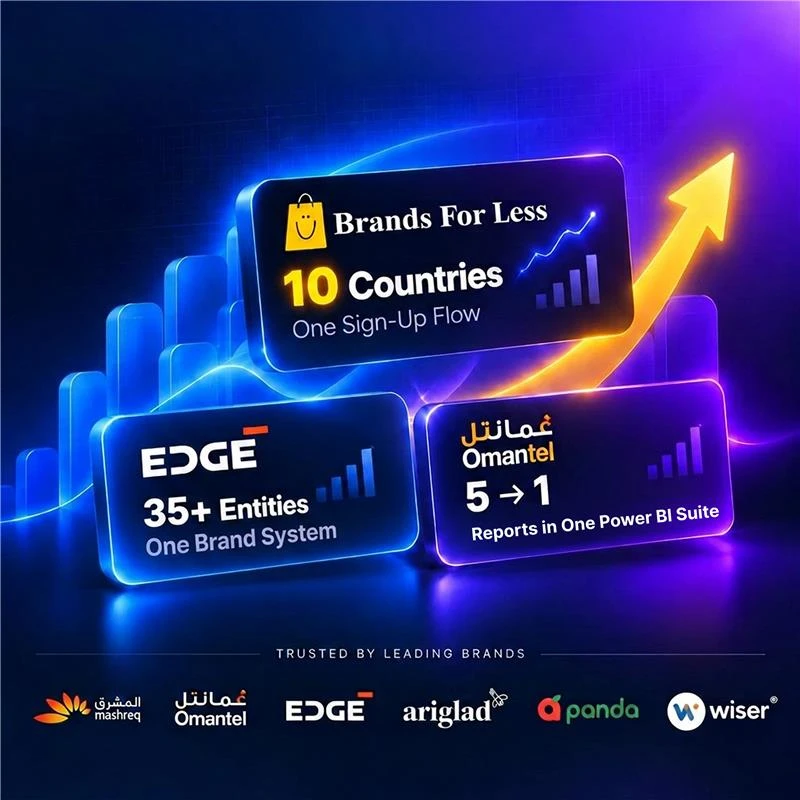
Brand identity, website and print for a group of 12,000 staff, carried onto the IDEX show floor.
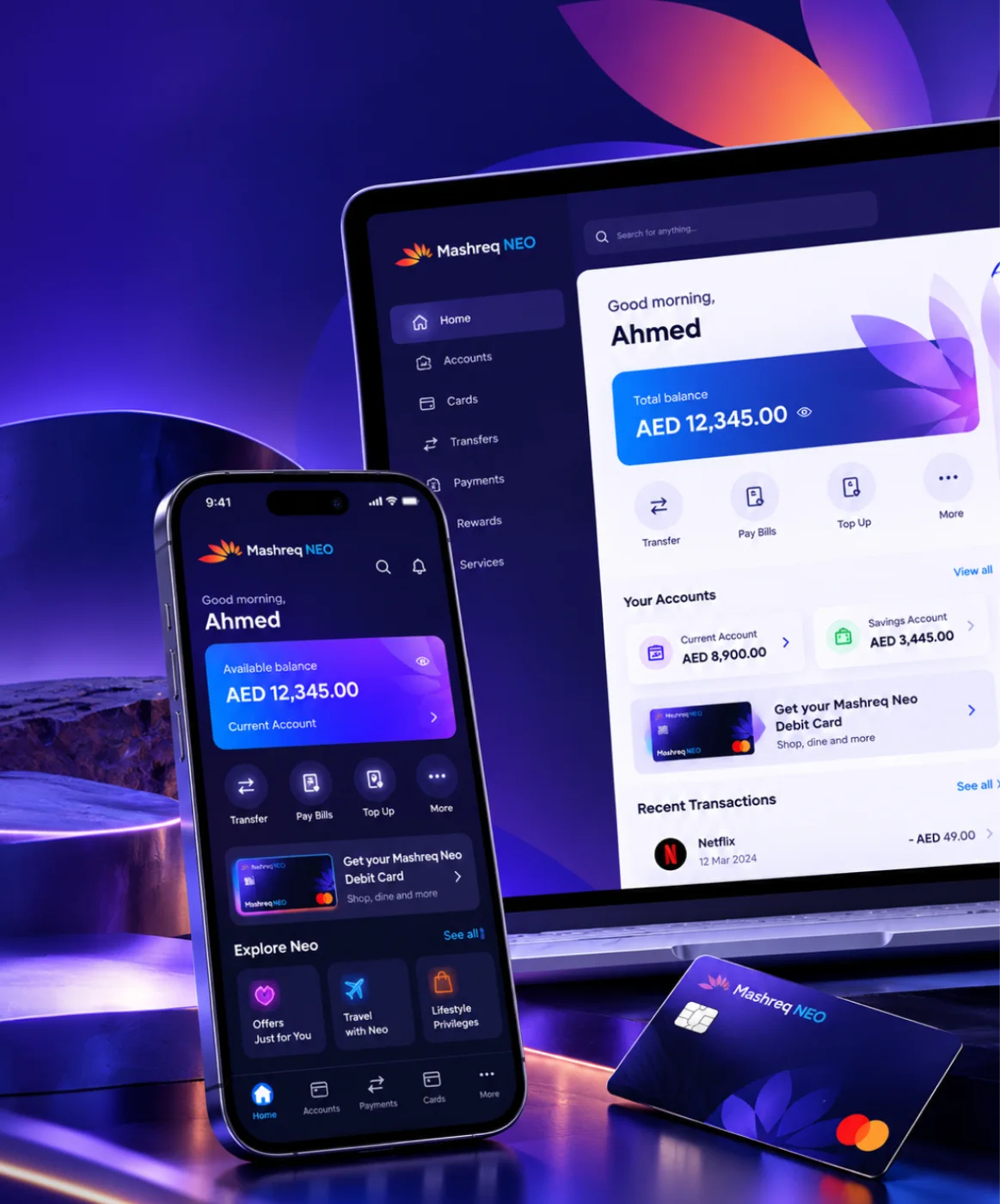
Mashreq NEO
Six performance areas in one index for leadership, plus NEO GPT, a private assistant for bank documents.
Brands For Less
Found where shoppers dropped off, then redesigned sign-up, banners and cart for a retailer with 120+ stores.
Omantel
Incident, SLA and workload reporting in one Power BI suite for Oman’s first telecom operator.




Client Testimonials
Client Success: Panda
We reworked Panda's live app and website, from search to checkout, for shoppers across Saudi Arabia.
"Thanks to UIUX Studio’s work, the client successfully launched their websites. The team maintained a professional approach and scheduled frequent in-person meetings to provide suggestions for improving the project and ensuring its timely delivery."
 Shreya LadCEO, Nutroponics
"The team is well-versed in the UI/UX domain and has designed a fantastic journey to support the site’s growth projection. Communication, timeliness, and quality of work have been very professional."
 Mohammed AbdullahZeaara.com
"The Studio has been an absolute game changer for us. After working on a few independent projects, they are now also helping our marketing team, proving their value to our business and earning praise from executives."
 BrandonProject Manager
"The UIUX Studio team consistently delivers exceptional work with dedication. We’ve completed an amazing app design together, and I’m excited to collaborate with them again in the future."
 Hani Farajvancouverhousefinders.com
"We are really pleased with the work that UIUX Studio team has completed for us in designing a website for a new brand. They completed the designs quickly, took on board changes, and the finished product is very professional."
 AnayaHead of Marketing, Freshminds
"I’ve worked with UIUX Studio team on two projects. They capture the vision and run with it! They create exceptional design! Couldn’t be happier with the quality work and files for my developers."
 Brandon PugmirePresident, Imprint City
 Client Results
Reviewed on Upwork, Trustpilot, Clutch, G2 and GoodFirms





Work With Us
Work with a dedicated design team, a fixed-scope project or hourly support. Every model gives you the same in-house designers and researchers.
Access a dedicated team of UI/UX designers and researchers, on-site or remote, who work alongside your engineers every week.
Get StartedGet clear, upfront pricing for a defined design project, such as product discovery, a mobile app design or a design system.
Get StartedGet design help by the hour, perfect for UX reviews, quick UI fixes, iterative changes or design QA before a release.
Get StartedSatisfaction scores are the least useful thing a usability test can generate. People rate an interface highly and still fail at it.
Finished unaided, finished after a nudge, or abandoned. Reported per task, because an average across tasks hides the broken one.
Against your current baseline where one exists. A flow that gets slower is a finding regardless of how it looked.
How often people went wrong, and whether the interface let them get back. Recovery matters more than prevention.
What people looked at and clicked before the correct control. Usually explains the completion number better than anything they said.
How badly each problem affected the task, and how many participants hit it. These two together set the fix order.
Which recommended changes were made, and what happened to completion in the next round. Testing without a re-test is half a loop.
From retail apps and banking dashboards to a defence group rebrand, we bring proven domain knowledge to every product we design and build.
Talk to Our Team
Streaming, OTT & content platforms

Fan engagement & live data

EdTech & learning platforms

AdTech & campaign tooling

PropTech & marketplaces
Payments, banking & wealth

Digital health & patient apps

Retail & D2C platforms

Supply chain & fleet ops
B2B products & dashboards
Testing is a checkpoint rather than a phase. It runs alongside the work either side of it, on whatever is currently the riskiest assumption.
Establishing which problem is worth solving, before testing whether a given solution solves it.
View service ↗The flows and states that get tested as wireframes, while changing them is still free.
View service ↗The interface built after the structure has survived contact with real users.
View service ↗Testing on device, where thumb reach and interruption change the results completely.
View service ↗Forty-five minutes with a researcher. We will write the task that would settle it, tell you how many users it needs, and what a fortnight would tell you that a meeting will not. No deck, no discovery fee.
Test before you buildBook a free consultation with our design, engineering and AI experts. Share your idea and we’ll come back within one business day with clear next steps.
Recognised By


Our Offices

UAE · Headquarters
Office OFF2-127, SMARK 2 Building, Plot No. 33-0, Ras Al Khor Industrial Second, Dubai, UAE

India
B-409, Bestech Business Tower, Sector 66, SAS Nagar, Punjab 160062

Australia
Tapleys Hill Road, Fulham Gardens, SA 5024