






Offshore / Onsite
Hire Dedicated Team
Access dedicated strategists and senior engineers, on-site or remote, who review your plans and stay on call while you decide.
Get StartedDigital product strategy: what the product is for, who it is for, what it costs and why anyone would switch. Tested with real buyers rather than agreed internally, because a strategy nobody outside the building has challenged is a hypothesis with a deck.
Our Clients

















Product strategy is unusually easy to get wrong confidently, because internal agreement feels like validation. Four patterns account for most of the failures, and each is testable in weeks rather than discovered in quarters.
A statement everyone internally likes and no buyer recognises, because it describes the product rather than their problem.
Positioning drafted from buyer language, then tested with people who could actually buy. Recognition is measurable.
A price anchored to someone else’s cost structure and segment, which leaves either margin or volume on the table.
Willingness to pay tested directly, with the value metric chosen to align what you charge for with what customers get.
A list of features standing in for a decision about who you serve and what you decline to do.
The segment and the job stated explicitly, with what you will not build named so scope has a natural edge.
A better product with no answer to what a buyer gives up to move. Inertia beats features nearly every time.
The switching cost quantified from the buyer’s side, and the migration story treated as part of the product.
Short enough that people read it, specific enough that it settles arguments about what to build next quarter.
Who this is for and what job they are hiring it to do, narrow enough to be actionable and evidenced rather than asserted.
A position drafted from buyer vocabulary and tested with real prospects, with the alternatives we rejected and why.
Value metric, tiers and price points modelled against tested willingness to pay, not against a competitor screenshot.
Where you genuinely differ, where you are at parity, and which of those gaps a buyer actually cares about.
What a buyer gives up to move to you, and what the product has to do to make that cost bearable.
What to do first, what to decline, and the number that tells you within a quarter whether the position is working.
These share a common feature: an expensive commitment about to be made on the basis of internal consensus.
Acquisition still works but conversion and expansion have stalled, which is usually positioning rather than marketing.
What works for current customers may not translate, and finding out in a failed launch is the expensive way.
The product has grown, the price has not, and nobody has tested what the market would actually bear.
The comparison your buyers make has shifted, and your differentiation may no longer be where you think.
The story has to hold up to scrutiny from people who will test it against the numbers.
Overlapping propositions confusing buyers and your own sales team, and a decision required about what survives.
Positioning work rests on knowing the words your buyers use, and that evidence already exists in your sales calls, lost-deal notes, support tickets and review sites. Reading all of it rather than a sample is what makes the difference between positioning that lands and positioning that sounds good internally — and it compresses a five-week engagement into three.
Sales calls, lost-deal notes and review sites read in full to extract the words buyers actually use for the problem. This is the raw material of positioning and it is normally sampled.
Competitor messaging, pricing pages and review sentiment analysed at scale, so differentiation is assessed against what the market says rather than what a spreadsheet claims.
Price objections and discount patterns pulled from CRM and call data, so willingness-to-pay research starts from evidence rather than from a blank survey.
Which position to take is a bet about the market, made by people who spoke to your buyers and your sales team. Reading faster is what buys the time to test that bet properly before you commit to it.
See our AI practiceCandidate positions are put in front of people who could purchase. Internal preference is not evidence and we do not treat it as such.
Signals from CRM data narrow the range; actual willingness to pay is established through structured research with buyers.
Anything drawn from public material is checked against what your sales team hears in live deals.
A shorter engagement is priced as one. We do not bill the old shape and keep the difference.
The order that matters: buyer language first, position second, price third, and every one of them tested outside the building before it goes into a plan.
Sales calls, lost-deal notes, support tickets, reviews and competitor material. The gap between your vocabulary and your buyers’ is usually the first finding.
Who this is for, narrowly, and what job they are hiring it to do. Broad segments feel safe and produce positioning nobody recognises.
Two or three candidate positions in front of real prospects and recent losses. Recognition and relevance are measurable; internal preference is not.
Value metric, tiers and price points, tested against willingness to pay and modelled for margin. The value metric decision matters more than the number.
What to do first, what to decline, and the metric that tells you within a quarter whether the position is working. Walked through with your board.
Your own sales and support evidence first, then structured research with real buyers. Everything stays in your accounts.






Your own sales and support evidence first, then structured research with real buyers. Everything stays in your accounts.



Your own sales and support evidence first, then structured research with real buyers. Everything stays in your accounts.



Your own sales and support evidence first, then structured research with real buyers. Everything stays in your accounts.



Your own sales and support evidence first, then structured research with real buyers. Everything stays in your accounts.


Case Studies
Selected work for retail, banking, telecom and defence teams, from brand identity and mobile apps to data platforms and AI assistants.
Panda
Reworked search, categories and checkout in Panda’s live app and website, in Arabic and English.
EDGE Group
Brand identity, website and print for a group of 12,000 staff, carried onto the IDEX show floor.
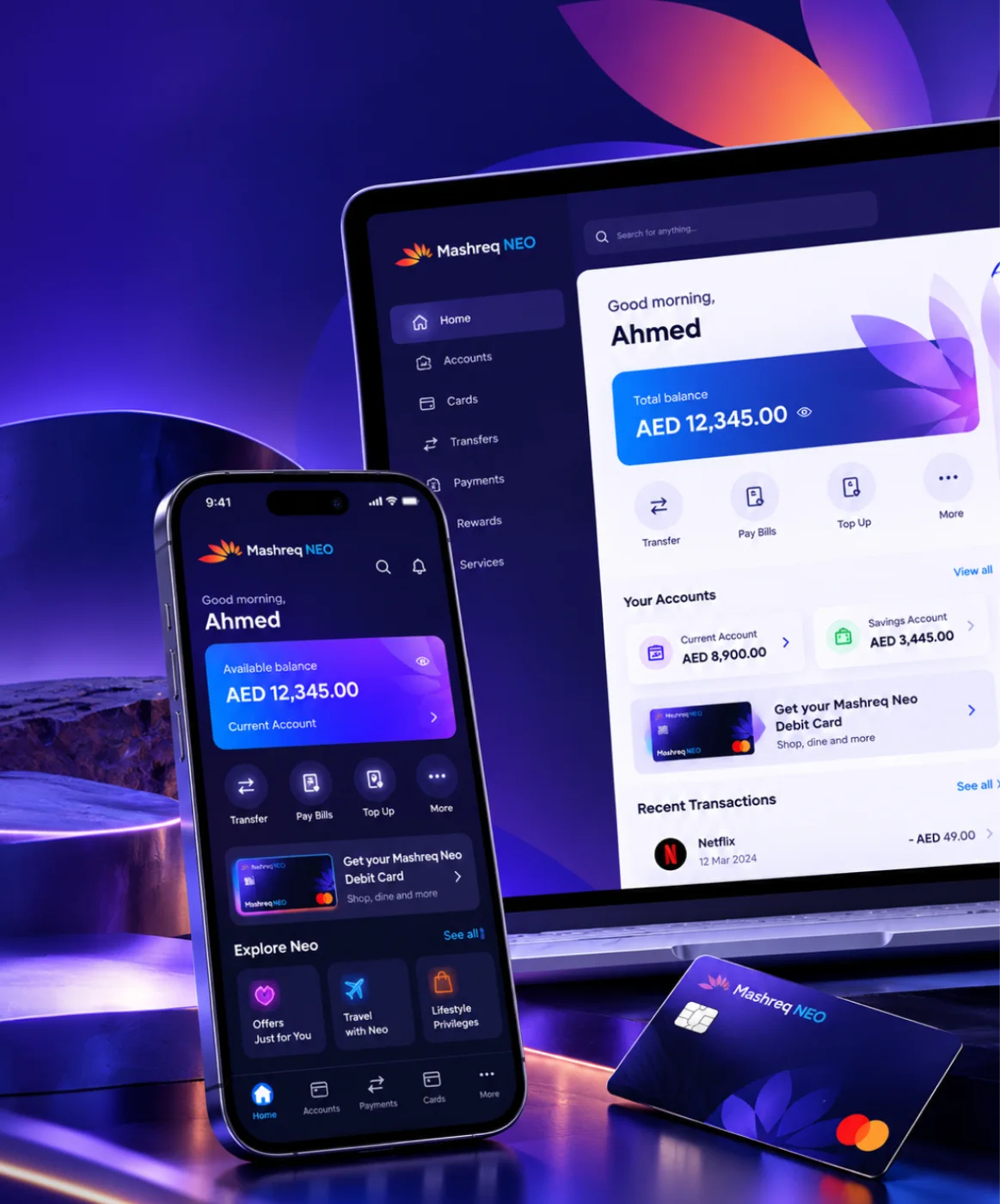
Mashreq NEO
Six performance areas in one index for leadership, plus NEO GPT, a private assistant for bank documents.
Brands For Less
Found where shoppers dropped off, then redesigned sign-up, banners and cart for a retailer with 120+ stores.
Omantel
Incident, SLA and workload reporting in one Power BI suite for Oman’s first telecom operator.




Client Testimonials
Client Success: Panda
We reworked Panda's live app and website, from search to checkout, for shoppers across Saudi Arabia.
"Thanks to UIUX Studio’s work, the client successfully launched their websites. The team maintained a professional approach and scheduled frequent in-person meetings to provide suggestions for improving the project and ensuring its timely delivery."
 Shreya LadCEO, Nutroponics
"The team is well-versed in the UI/UX domain and has designed a fantastic journey to support the site’s growth projection. Communication, timeliness, and quality of work have been very professional."
 Mohammed AbdullahZeaara.com
"The Studio has been an absolute game changer for us. After working on a few independent projects, they are now also helping our marketing team, proving their value to our business and earning praise from executives."
 BrandonProject Manager
"The UIUX Studio team consistently delivers exceptional work with dedication. We’ve completed an amazing app design together, and I’m excited to collaborate with them again in the future."
 Hani Farajvancouverhousefinders.com
"We are really pleased with the work that UIUX Studio team has completed for us in designing a website for a new brand. They completed the designs quickly, took on board changes, and the finished product is very professional."
 AnayaHead of Marketing, Freshminds
"I’ve worked with UIUX Studio team on two projects. They capture the vision and run with it! They create exceptional design! Couldn’t be happier with the quality work and files for my developers."
 Brandon PugmirePresident, Imprint City
 Client Results
Reviewed on Upwork, Trustpilot, Clutch, G2 and GoodFirms





WORK WITH US
UIUX Studio offers flexible technology advisory with a dedicated team of strategists and senior engineers. Whether you need a full technology roadmap or a second opinion on one decision, our engagement models give you independent advice when you need it.
Access dedicated strategists and senior engineers, on-site or remote, who review your plans and stay on call while you decide.
Get StartedGet clear, upfront pricing for work such as an AI readiness review, product discovery or a vendor selection, with set deliverables.
Get StartedGet a strategist or senior engineer by the hour to review an architecture, a vendor or a project plan.
Get StartedStrategy is judged on commercial movement within two quarters, not on how good the document reads.
Whether the sharper position actually converts better where it was aimed. The primary test.
How long deals take once the positioning is clearer. Confusion shows up as time before it shows up as loss.
Whether pricing and packaging changes moved it, and whether volume held.
Shifts in why deals are lost. Losing on price is a different problem from losing on relevance.
Whether buyers can restate your position in their own words. Measured in testing rather than assumed.
Requests turned down because they fall outside the stated segment. A strategy that declines nothing is not a strategy.
From retail apps and banking dashboards to a defence group rebrand, we bring proven domain knowledge to every product we design and build.
Talk to Our Team
Streaming, OTT & content platforms

Fan engagement & live data

EdTech & learning platforms

AdTech & campaign tooling

PropTech & marketplaces

Payments, banking & wealth

Digital health & patient apps

Retail & D2C platforms

Supply chain & fleet ops

B2B products & dashboards
Positioning decisions cascade into product, design and marketing, so this engagement rarely stands alone.
Sizing the opportunities the strategy points at, in money, before committing engineering.
View service ↗Deeper user research on the segment the strategy selects.
View service ↗Taking the tested position into market as messaging and campaigns.
View service ↗Designing the experience the positioning promises, tested before build.
View service ↗Forty-five minutes with a strategist. We will tell you what language your buyers use for the problem, where your positioning diverges from it, and whether the losses were about price or about relevance. No deck, no discovery fee.
Book a strategy reviewBook a free consultation with our design, engineering and AI experts. Share your idea and we’ll come back within one business day with clear next steps.
Recognised By


Our Offices

UAE · Headquarters
Office OFF2-127, SMARK 2 Building, Plot No. 33-0, Ras Al Khor Industrial Second, Dubai, UAE

India
B-409, Bestech Business Tower, Sector 66, SAS Nagar, Punjab 160062

Australia
Tapleys Hill Road, Fulham Gardens, SA 5024