





Offshore / Onsite
Hire Dedicated Team
Access a dedicated RevOps specialist or team, on-site or remote, who runs forecasting, reporting and CRM requests alongside your sales team.
Get StartedCRM and pipeline design with entry and exit criteria per stage, a field model your reps will actually use, and validation that prevents silent stage skipping. Every forecast is arithmetic on top of stage definitions, so this is where accuracy is really decided.
Our Clients

















A pipeline degrades quietly. Nothing breaks, the dashboard keeps loading, and within two quarters the same stage means four different things depending on who moved the deal. Four mechanisms do it.
"Proposal Sent" is a thing your rep did, not a thing the buyer did, so the stage tells you nothing about likelihood.
Stages defined by buyer commitment — a date agreed, a decision-maker engaged, a requirement confirmed — which is what actually predicts closing.
A deal moves when a rep feels optimistic. The same opportunity would sit two stages apart under two different reps.
Objective entry and exit criteria per stage, enforced in the CRM so movement requires evidence rather than sentiment.
Thirty required fields, so reps enter placeholder values at speed and the data is worse than if you had asked for nothing.
A minimal field model tested with reps for time-to-complete, with anything not used in a decision removed entirely.
Three years of one-off requests: fields for a campaign that ended, stages for a product line that was discontinued.
A clean model with a documented owner and a change process, so the next request is assessed rather than simply added.
Configuration is the easy half. The other half is making it the path of least resistance for a rep under quota pressure.
CRM and pipeline design with entry and exit criteria per stage with an owner and a required next step, signed by sales leadership before anything is configured.
The minimum data needed for every decision the business makes, with everything else removed rather than merely deprioritised.
Enforcement that prevents stage skipping, stale deals and missing close dates, without making the CRM unusable mid-call.
How opportunities are assigned, escalated and reassigned, with the rules in the system rather than in a manager’s head.
Duplicates merged, dead deals closed, account hierarchies rebuilt. A clean model on dirty data still produces arguments.
Training by role, reference material, and adoption reported weekly so we find out where it is not being followed.
All of these are symptoms of the same root cause: stage definitions that were never written down or never enforced.
Commit lands short every quarter in the same direction, which is a stage-definition problem rather than a forecasting one.
The same opportunity would be at different stages depending on who owns it, so pipeline totals are not comparable.
What worked with four reps does not work with twenty, and nobody has redesigned the process for the larger team.
Moving platforms is the right moment to fix the model rather than port the mess into something newer.
Every review starts by litigating the numbers, because the underlying definitions were never agreed.
A new revenue leader inheriting a pipeline they cannot interpret, needing a defensible baseline.
The evidence for a good stage model already exists in your closed-won and closed-lost history: what actually preceded a win, how long each phase really took, which fields were filled on deals that closed. Reading all of it rather than a sample is what turns stage design from opinion into arithmetic, and it compresses the audit phase into days.
Three years of won and lost opportunities read for what genuinely preceded a close, so stage criteria are derived from evidence rather than from a workshop’s intuition.
Account and contact deduplication, hierarchy reconstruction and dead-deal identification across tens of thousands of records, proposed for your team to approve.
Every field measured for completion rate and use in reporting, which is how thirty required fields become the eight that matter.
History tells you what correlated with winning. What your team will actually commit to enforcing is a negotiation with sales leadership, and a definition nobody signed does not survive a quota month.
See our AI practiceCriteria derived from history are a proposal. What gets enforced is agreed and signed in a workshop, because enforcement is a management commitment.
Deduplication and merges are proposed, reviewed and dry-run against a copy. Nothing is merged automatically on a match score.
A field with low completion may be critical to one team. We confirm before removing anything.
We report weekly on where the new process is not being followed rather than declaring the rollout complete.
Configuration is fast. Getting sales leadership to commit to enforcing a definition is the slow part, and doing it in the wrong order produces a system reps route around within a month.
Three years of closed deals against how they moved, plus field completion rates and the workarounds reps have invented. The gap between recorded and real process is the finding.
CRM and pipeline design with entry and exit criteria per stage, agreed with sales leadership and signed. Objective criteria rather than rep judgement, because judgement varies under pressure.
Fields, validation, routing and reporting built in your CRM, with legacy data deduplicated and hierarchies rebuilt so the new model runs on clean records.
Reps, managers and leadership trained separately, because they need different things. Plus reference material short enough that someone reads it mid-call.
Where the new process is not being followed, reported weekly for the first quarter. A rollout email is not adoption and we do not treat it as one.
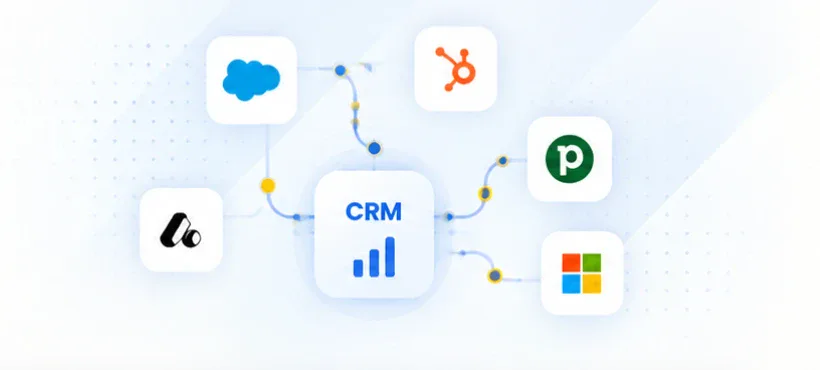
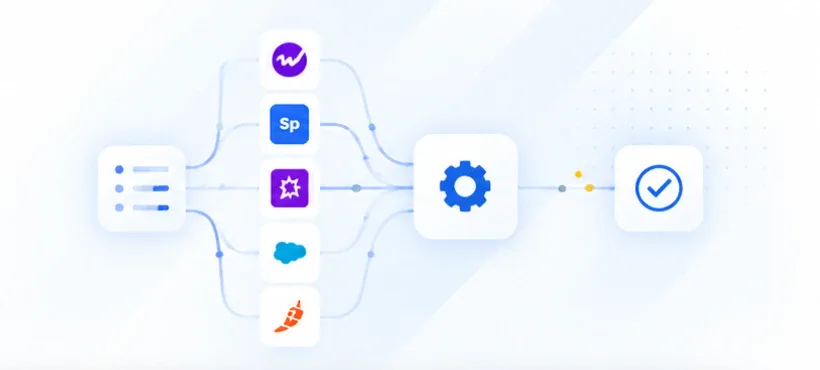
In the CRM you already pay for. Replatforming is a recommendation of last resort rather than an opening move.






In the CRM you already pay for. Replatforming is a recommendation of last resort rather than an opening move.



In the CRM you already pay for. Replatforming is a recommendation of last resort rather than an opening move.



In the CRM you already pay for. Replatforming is a recommendation of last resort rather than an opening move.




In the CRM you already pay for. Replatforming is a recommendation of last resort rather than an opening move.


Case Studies
Selected work for retail, banking, telecom and defence teams, from brand identity and mobile apps to data platforms and AI assistants.
Panda
Reworked search, categories and checkout in Panda’s live app and website, in Arabic and English.
EDGE Group
Brand identity, website and print for a group of 12,000 staff, carried onto the IDEX show floor.
Mashreq NEO
Six performance areas in one index for leadership, plus NEO GPT, a private assistant for bank documents.
Brands For Less
Found where shoppers dropped off, then redesigned sign-up, banners and cart for a retailer with 120+ stores.
Omantel
Incident, SLA and workload reporting in one Power BI suite for Oman’s first telecom operator.





Client Testimonials
Client Success: Panda
We reworked Panda's live app and website, from search to checkout, for shoppers across Saudi Arabia.
"Thanks to UIUX Studio’s work, the client successfully launched their websites. The team maintained a professional approach and scheduled frequent in-person meetings to provide suggestions for improving the project and ensuring its timely delivery."
 Shreya LadCEO, Nutroponics
"The team is well-versed in the UI/UX domain and has designed a fantastic journey to support the site’s growth projection. Communication, timeliness, and quality of work have been very professional."
 Mohammed AbdullahZeaara.com
"The Studio has been an absolute game changer for us. After working on a few independent projects, they are now also helping our marketing team, proving their value to our business and earning praise from executives."
 BrandonProject Manager
"The UIUX Studio team consistently delivers exceptional work with dedication. We’ve completed an amazing app design together, and I’m excited to collaborate with them again in the future."
 Hani Farajvancouverhousefinders.com
"We are really pleased with the work that UIUX Studio team has completed for us in designing a website for a new brand. They completed the designs quickly, took on board changes, and the finished product is very professional."
 AnayaHead of Marketing, Freshminds
"I’ve worked with UIUX Studio team on two projects. They capture the vision and run with it! They create exceptional design! Couldn’t be happier with the quality work and files for my developers."
 Brandon PugmirePresident, Imprint City
 Client Results
Reviewed on Upwork, Trustpilot, Clutch, G2 and GoodFirms





WORK WITH US
UIUX Studio offers flexible RevOps consulting with dedicated specialists who work in your existing CRM. Whether you need a full RevOps rebuild or help with a single report, our engagement models give you the support to forecast with confidence.
Access a dedicated RevOps specialist or team, on-site or remote, who runs forecasting, reporting and CRM requests alongside your sales team.
Get StartedGet clear, upfront pricing for a defined project, such as a pipeline audit, a RevOps rebuild or a CRM migration.
Get StartedGet RevOps help by the hour, perfect for CRM fixes, new reports, workflow changes or a quick forecast check.
Get StartedActivity counts tell you reps are busy. These tell you whether the pipeline can be trusted.
How close the commit lands to actual. The single measure of whether the stage model works.
Whether conversion rates hold across reps and teams. Wide variance means the criteria are not being applied consistently.
Share of open opportunities with the fields the forecast depends on actually filled. Everything else rests on this.
Deals jumping stages or moving backward. Falling counts mean the validation is doing its job.
How long deals really sit, which is what makes a slipping quarter traceable to a specific phase.
Where the process is followed and where it is not, reported per team rather than as one flattering average.
From retail apps and banking dashboards to a defence group rebrand, we bring proven domain knowledge to every product we design and build.
Talk to Our Team
Streaming, OTT & content platforms

Fan engagement & live data

EdTech & learning platforms

AdTech & campaign tooling

PropTech & marketplaces

Payments, banking & wealth

Digital health & patient apps

Retail & D2C platforms

Supply chain & fleet ops

B2B products & dashboards
Nearly every other RevOps engagement depends on the stage model being sound first.
Weighted and commit views built on stage criteria that mean something.
View service ↗One definition of a qualified lead, with handoff SLAs both teams accept.
View service ↗Board reporting built on definitions held in code rather than in a BI tool.
View service ↗Systems reconciled into one revenue model with the account hierarchy fixed.
View service ↗Forty-five minutes with a RevOps lead. We will tell you which stage the gap opened in, whether it is a definition or a behaviour problem, and what we would change first. No deck, no audit fee.
Rebuild the pipelineBook a free consultation with our design, engineering and AI experts. Share your idea and we’ll come back within one business day with clear next steps.
Recognised By


Our Offices

UAE · Headquarters
Office OFF2-127, SMARK 2 Building, Plot No. 33-0, Ras Al Khor Industrial Second, Dubai, UAE

India
B-409, Bestech Business Tower, Sector 66, SAS Nagar, Punjab 160062

Australia
Tapleys Hill Road, Fulham Gardens, SA 5024
